SALVAGUARDAR – Aurélie Salavert
09.09 – 31.10.2026
inquire ↗
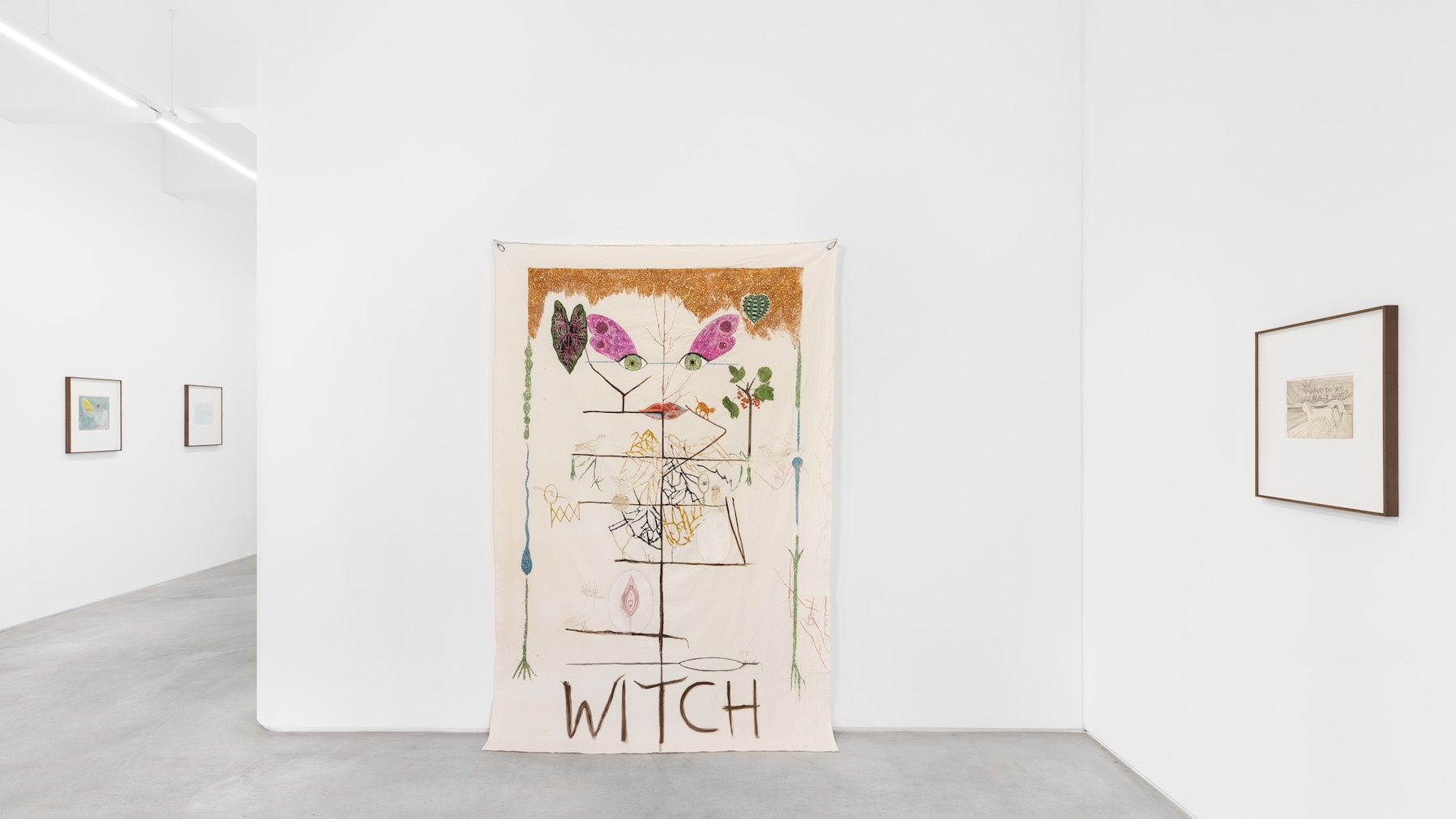
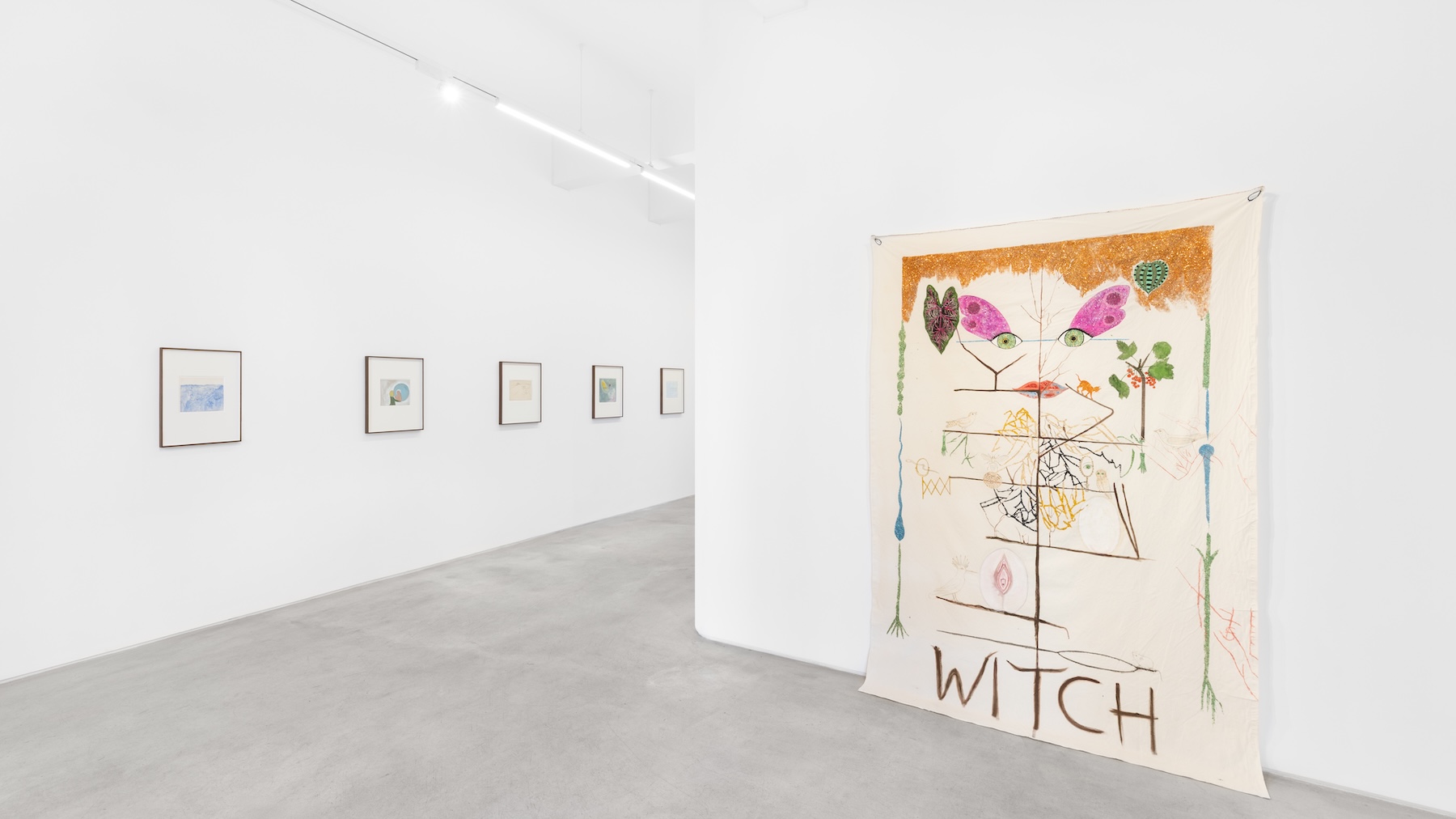
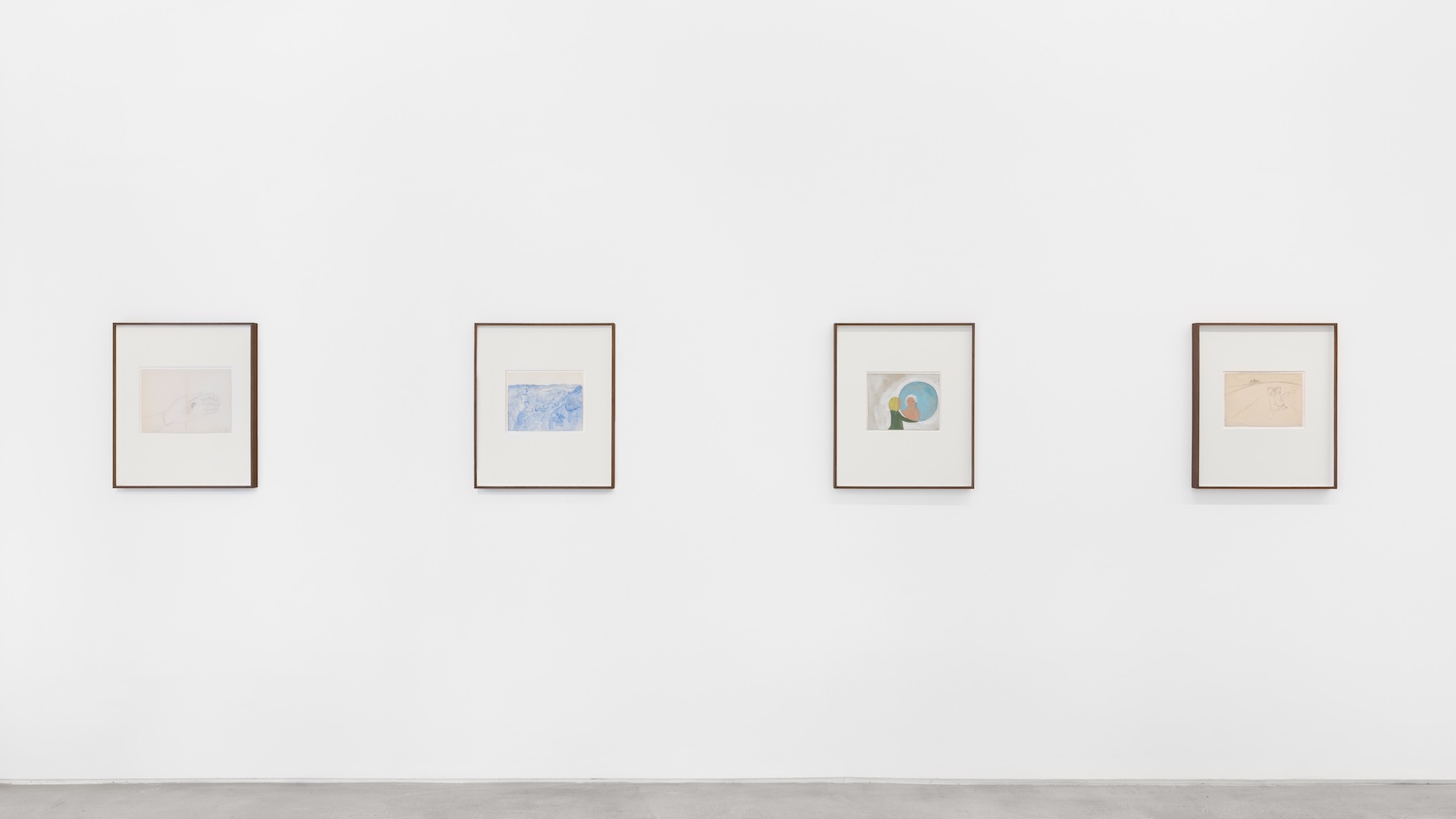
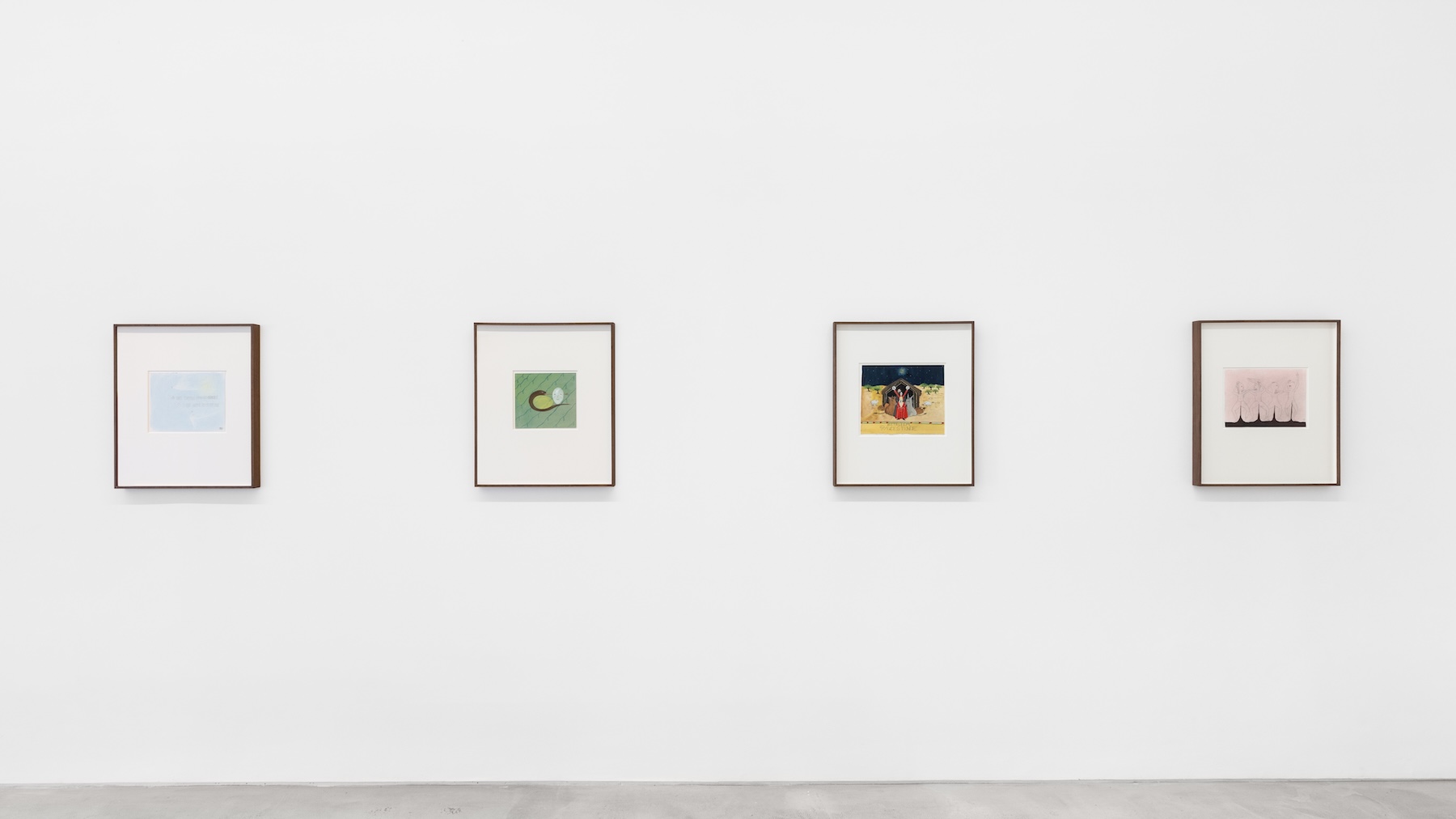
Press release:
As a curator and artist, I consider myself to be an explorer of sorts, contending daily with an overwhelming landscape of art, faced with the decision of which paths to chart. During these journeys, as I sift through hundreds of works in a quest to locate art marked by vision, mystery, and revelation, I often fool myself into thinking I know what I’m looking for. Yet it is usually the unexpected that yields the greatest profundity.
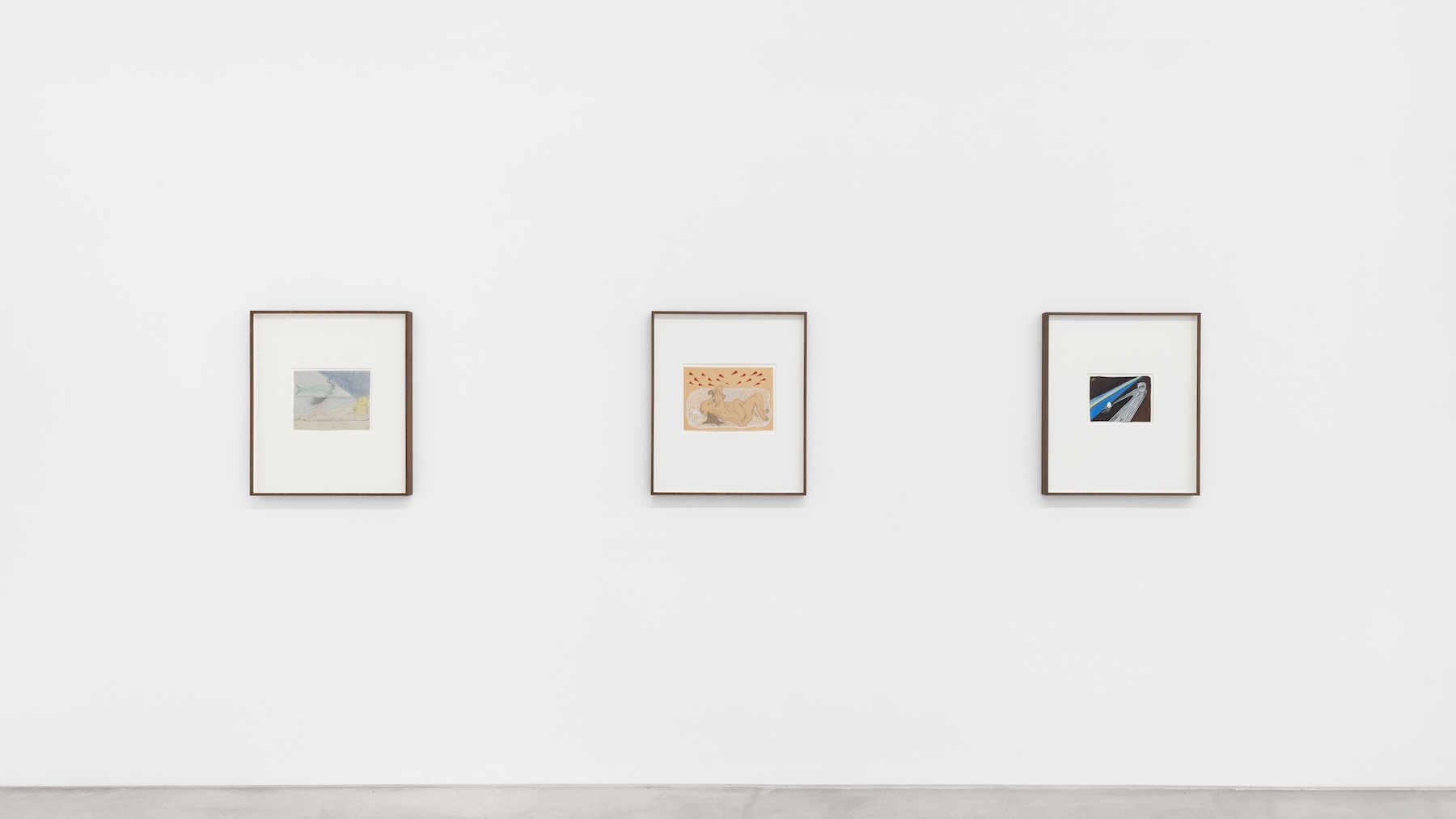
Such was the case when I stumbled upon the work of a French-born artist whose output, like all great art, conjured a sense of wonder rather than resolution. As I studied these curious depictions—waif-like women soaring hand-in-hand above a sea of flames, anthropomorphic felines cavorting in bordellos, silken enchantresses pushing open bedroom windows—questions spilled from my mind. How could such peculiar compositions dance so beautifully between innocence, dark humor, sophistication, and raw impulse? Why were their creation dates absent? Who was this artist, and how had I somehow missed her until now?
What began as a tentative message on social media, slowly blossomed into a professional collaboration and friendship that has lasted over six years. While many of the mysteries of her work have remained, every so often, a lightly penciled pathway reveals itself, allowing my innermost self to proceed into the transcendent universe of Aurélie Salavert.
Guided by the endless potential of pure imagination, Salavert’s delicate lines and coaxing colors breathe with the potency of a child’s dream, transforming fragile truths into visual poetry. Like fragmented self portraits, the artist’s memories and lived experiences are reimagined through a curious cast of characters, each with their own distinct physical appearance, visual language and humor. For the artist—whether a waving daisy, floating faces, or mischievous birds—her creations pulse with the warm intent of the artist spirit.
While not strictly intended as self-portraits, viewing her work through this lens offers a rich vantage point from which to examine her approach. At a young age, Salavert discovered the writing of Portuguese poet Fernando Pessoa—a voice that remains deeply significant to her practice. Pessoa is perhaps best known for his invention of the groundbreaking concept of the heteronym—or fully realized literary alter egos, complete with their own biography, personality, and voice. Pessoa once wrote, “I feel as if I were a secret theater where different plays are performed by different actors.” After becoming more familiar with Pessoa’s oeuvre, one can’t help but be illuminated to Salavert’s enigmatic dramatizations within this light.
More recently, Salavert has found particular meaning in the writings of Simone Weil, especially her essay The Person and the Sacred. Weil explores the tension between the person—the ego and the individual—and that place within us that touches something sacred, a truth that extends beyond the boundaries of the individual self. As Salavert recently observed, “I can feel these levels of consciousness clashing, coexisting, or protecting one another in my drawings, ultimately coming together as a whole.”
Curiously, the two writers form a philosophical bridge that Salavert seems to travel repeatedly, both in her imagery and in her artistic approach. Her works give form to an internal theater populated by shifting characters and identities that are at once her, but with a detachment from the ego and effacement of the “person” to make room for something vast. It is this space that communicates so directly yet abstractly—offering another way of understanding these shifting selves, not simply as separate identities, but as coexisting aspects of a larger consciousness.
This same internal theater takes root in the rhythms of daily life— in understanding not only why Salavert creates, but how. Her practice is built upon a set of deeply personal, almost ascetic disciplines. She begins each of her days drawing in bed, capturing images as they appear in silent moments of solitude. “It happens naturally, a vision,” she explains. “Sometimes something real catches my attention with a particular flavor, and I recognize it in the same way. I make a drawing like a note in a notebook.” Salavert’s practice of remaining receptive to internal visions—paired with a quiet discipline that releases
the ego—is deeply informed by zazen, the seated meditation posture central to Zen Buddhism. This spiritual journey became central to her life and led her to follow the teachings of Roland Yuno Rech, whose philosophy rejects rigid chronology in favor of continuous, cyclical renewal. She embraces this idea in her own practice by keeping her pieces strictly undated, rejecting linear timelines to emphasize a fluid, cyclical continuum.
This outlook of renewal also finds expression in her use of recycled materials and surfaces—old papers, old book covers, cardboard packaging from food products, the reverse of cereal boxes. To Salavert, reducing the material waste inherent within our capitalist system is critical to the energy within her work. “I have a taste for economy in this area, and I love the idea of being able to continue indefinitely, with little,” states the artist. Through her artistic practice, “my personal history, and a political consciousness… has intensified greatly amidst a world in crisis—ecological collapse, the humanitarian tragedy in Gaza, and so on.” These harsh realities continue driving her towards a more personal form of activism, within her material choices and spiritual journey.
Throughout Aurélie Salavert’s exploration of art’s transcendental potential, she maintains a steadfast belief that her work must emphasize joy and kindness as imperatives. “These are heavy times. We all need joy and lightness,” she states, offering her creative practice as a quiet refuge from global violence. Indeed, the title of this exhibition, Salvaguardar, speaks to the protective power of art as resistance. For Aurélie Salavert, art is a Talisman, a safeguard that provides refuge for the soul while inspiring change, standing between the vulnerable and whatever may try to harm them.
My own path into Aurélie Salavert’s universe was cleared by a reverence for such ideals and a sense of connection that unburdened my cynicism and opened my heart. This relationship felt truly revelatory—to find art that was mysterious, enigmatic, and yet spoke with such unadorned clarity. Aurélie generously welcomes us into the solace of her creative spirt, asking us all to experience the calm within her soft lines and delicate washes, reminding us that it’s the imagination that will provide the most powerful form of resistance.
Exhibition text by mepaintsme